Regain Clear Vision with Cataract Eye Surgery
Early diagnosis leads to better outcomes.
Cataracts often develop slowly, and it's easy to ignore subtle changes in your vision until they start to interfere with daily life. If you've noticed cloudiness, glare from lights, or a general fading of colours, it could be an early sign of cataract formation. A prompt consultation with an experienced eye specialist like Mr Suresh Marpuri can help identify the condition early, giving you time to plan the most appropriate treatment before your vision worsens.
Understanding when cataract surgery is needed.
Many patients worry about the right time to consider surgery. Cataract treat- ment is not about hitting a medical threshold-it's about improving your quality of life. If your vision is affecting your ability to read, drive, or enjoy daily activities, it's worth exploring your options. Mr Marpuri offers honest, informed guidance based on your individual vision needs, helping you feel confident about when and how to proceed with treatment.
See a cataract specialist you can trust in Essex!
Restore your sight and enjoy life to the maximum with cataract surgery, perfor- med by expert surgeons. Mr. Suresh marpuri is a renowned surgeon, having per- formed more than tens of thousands of cataract surgeries. Book your consulta- tion and see the world more clearly.
Cataracts are classified based on their location within the eye's lens and their underlying causes. The most common age-related cataracts are:
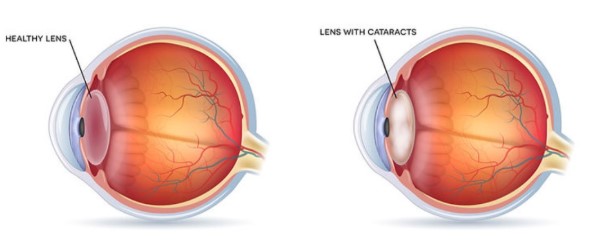
Originating in the outer layer of the lens, these cataracts form wedge-shaped opacities that progress towards the Centre. They commonly cause issues with glare and light scatter, especially at night.
These develop in the central zone of the lens, leading to gradual hardening and yellowing. Symptoms often include blurred distance vision and difficultly distin- guishing colours.
Located at the back of the lens, these cataracts progress swiftly. Individuals may experience symptoms including glare, halos around lights and difficulty reading in bright lighting conditions.
Complex cataract surgery requires the expertise of experienced surgeons and specialised techniques to ensure safe and successful outcomes. With my exten- sive training and surgical experience, I am often entrusted to operate on many challenging cases referred to me from colleagues. If you think you may be at in- creased risk from cataract surgery, I encourage you to discuss your options with me.
During your consultation as on experienced cataract surgeon, I will discuss your visual goals, lifestyle needs, and preferences to determine the most suitable treat- ment plan for you. I will guide you through the process and answer any questions you may have to ensure you feel confident and informed about your treatment decision.
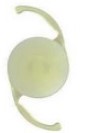
Lately there is a vast developments in intralocular lenses, brief description of their benefits and risks described as below
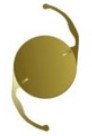
Widely offered in NHS to improve distance vision
The Benefits of Monofocal IOLs:
Reliable clear distance vision: Monofocal IOLs offer exceptional visual clarity at the selected distance, allowing you to enjoy crisp and sharp vision for everyday activities.
Proven Track Record: Monofocal IOLs have been widely used for decades with a long history of safety and effectiveness. They are a trusted option for restoring vision in patients with cataracts or significant refractive errors.
Reduced Visual Disturbances: Compared to multifocal or EDOF lenses, monofocal IOLs may result in fewer visual disturbances such as halos, glare, or fluctuations in vision, particularly in low-light conditions.
Cost-Effective Solution: Monofocal IOLs are often more affordable than multifocal or EDOF lenses, making them an attractive option for patients seeking excellent visual outcomes without breaking the bank.
The limitations of monofocal IOLs:
No freedom from glasses: Only provides targeted clear vision usually for distance only, for near most likely needs reading glasses may also for intermediate distance (computer work)
No astigmatism correction: About 25% of eyes has significant astigmatism. These eyes may require toric IOLs to achieve the best visual results unaided, allowing for the greatest chance of spectacle independence.
Limited depth of focus: While monofocal IOLs will give excellent vision at the chosen distance (near or far), patients will still require glasses to adjust the focus for targets at other distances e.g. patients with monofocal lenses set for distance vision
The Royal College of Ophthalmologists (RCOpth) strongly recommends phacoemulsification clear lens extraction (CLE) as the first-line, definitive treatment for:
This recommendation is largely based on the results of the landmark EAGLE Trial (Effectiveness in Angle-closure Glaucoma of Lens Extraction), a large, multi-center randomized controlled study evaluating early lens extraction versus traditional treatment.
The EAGLE trial demonstrated that early clear lens extraction provides significant advantages over laser peripheral iridotomy (LPI), the previous standard of care. Key findings showed that CLE offers:
CLE achieved lower and more stable intraocular pressure compared to LPI.
Patients who underwent early CLE required fewer glaucoma medications and were less likely to need additional procedures.
Participants reported better visual function and overall quality of life after CLE.
CLE proved more cost-effective in the long term due to reduced follow-up treatments and improved patient outcomes.
For patients with early or less advanced angle-closure disease, the widespread use of clear lens extraction remains an ongoing research priority. However, CLE may still be considered on an individual basis, depending on:
These decisions should be made in consultation with Suresh Marpuri who is a specialist ophthalmologist experienced in angle-closure management.
In patients who also have a cataract, lens extraction is widely accepted as an appropriate and effective treatment option. Removing the lens helps open the anatomical drainage angle while also improving clarity of vision.
The Royal College of Ophthalmologists provides comprehensive information through its:
These resources can be accessed through the official RCOpth website.
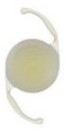
| Intraocular Lens | Monofocal (Standard) | Toric | Extended Depth of Focus | Multifocal |
|---|---|---|---|---|
.jpg) |
 |
 |
 |
|
| Astigmatism Correction | No | Yes | Yes | Yes |
| Zones of Clear Vision without glasses | Distance or Near | Distance or Near | Distance, Intermediate | Distance, Intermediate, Near |
| Need for glasses after surgery* | Progressives or bifocals for best vision at all distances | Reading glasses or distance glasses | Reading glasses often needed for near | Occasional glasses for very small print or driving at night |
| Strengths | Excellent vision with glasses | Excellent distance vision without glasses for distance or near | Increased glasses independence. No additional glare or halos. Can be used with other mild eye conditions. | Good vision across distance, intermediate, and near without glasses. Most spectacle independence. |
| Weaknesses | Glasses required full time for best vision | Glasses required for intermediate and near vision | Glasses needed for small print, poor contrast, or in low lighting | Contrast difficulty in low lighting. Not a good option if other eye conditions present. More halos and glare than EDOF lenses. |
| Glare / Halos | Mild | Mild | Mild | Moderate |
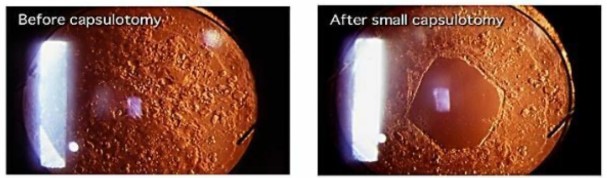
On occasion, the clear vision achieved after cataract surgery can become blurred. YAG laser treatment is a non-invasive procedure used to correct this.
Cataract surgery is a surgical procedure to remove and replace your natural lens with a new plastic one. This new plastic lens is placed inside the lens membrane (called the bag or capsule).
Over the course of time this lens membrane can thicken and become scarred. Vision can become misty and sensitive to glare as the cloudy capsule interferes with light reaching the back of the eye.
A YAG laser capsulotomy is a simple, common procedure to restore the vision to the level achieved after the original cataract surgery.
Suresh Marpuri uses a special lens to apply a laser beam that creates a small hole in the centre of the capsule. Light can then pass through to the back of the eye and vision clears. The treatment is painless as anaesthetic drops are used to numb your eye before the laser and takes less than 10 minutes.
You may notice floaters after capsulotomy which settles in 4 to 6 weeks. Rarely your eye pressure may raise following laser.